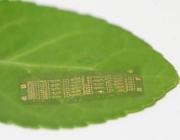
Wang Y, Wang T, Xiang L, Huang R, Long G, Wang W, Xi M, Tian J, Li W, Deng X, et al. Sub–180-nanometer-thick ultraconformable high-performance carbon nanotube–based dual-gate transistors and differential amplifiers. Science Advances [Internet]. 2024;10:eadq6022.
访问链接AbstractThere is increased interest in ultrathin flexible devices with thicknesses of <1 micrometers due to excellent conformability toward advanced laminated bioelectronics. However, because of limitations in materials, device structure, and fabrication methodology, the performance of these ultrathin devices and circuits is insufficient to support higher-level applications. Here, we report high-performance carbon nanotube–based thin-film transistors (TFTs) and differential amplifiers on ultrathin polyimide films with a total thickness of <180 nanometers. A dual-gate structure is introduced to guarantee excellent gate control efficiency and mechanical stability of the ultrathin TFTs, which exhibit high transconductance (8.96 microsiemens per micrometer), high mobility (127 square centimeters per volt per second), and steep subthreshold swing (84 millivolts per decade), and can sustain a bending radius of curvature of <10 micrometers. The differential amplifier achieves the highest gain-bandwidth product (1.83 megahertz) among flexible differential amplifiers, enabling higher-gain amplification of weak signals over an extended frequency spectrum that is demonstrated by amplification of electromyography signals in situ. Ultrathin, high-performance CNT-based electronics have the ability to amplify electromyography signals in situ.
Zhao Z, Hu Y.
Textile Triboelectric Nanogenerator: Future Smart Wearable Energy-Integration Technology. Advanced Materials Technologies [Internet]. 2024;9:2302012.
访问链接AbstractAbstract Triboelectric nanogenerator (TENG) technology based on the coupling of triboelectric effect and electrostatic induction has shown great potential in the energy-integration field. In recent years, the emerging of textile triboelectric nanogenerators (t-TENGs) has enabled the rapid development of wearable energy-integration technologies. The efficient mechanical energy harvesting and self-powered sensing capabilities of TENGs and the advantages of textiles can be combined to create t-TENGs for the construction of smart fabrics. Herein, a comprehensive review of t-TENGs is presented. This review begins from the working mechanism of conventional TENGs, after which the construction of triboelectric layers with fibers, yarns, and fabrics is discussed. Then, the different working modes of t-TENGs derived from TENGs, the critical features of t-TENGs and power management strategies are discussed. Finally, this review ends with a description of the recent progress in typical wearable applications based on t-TENGs. The light weight, low cost, flexibility, stretchability, washability, diverse material options, and excellent electrical performance of t-TENGs will make this technology a great choice for smart energy-integrated wearable devices in the future.