摘要:
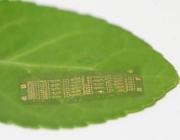
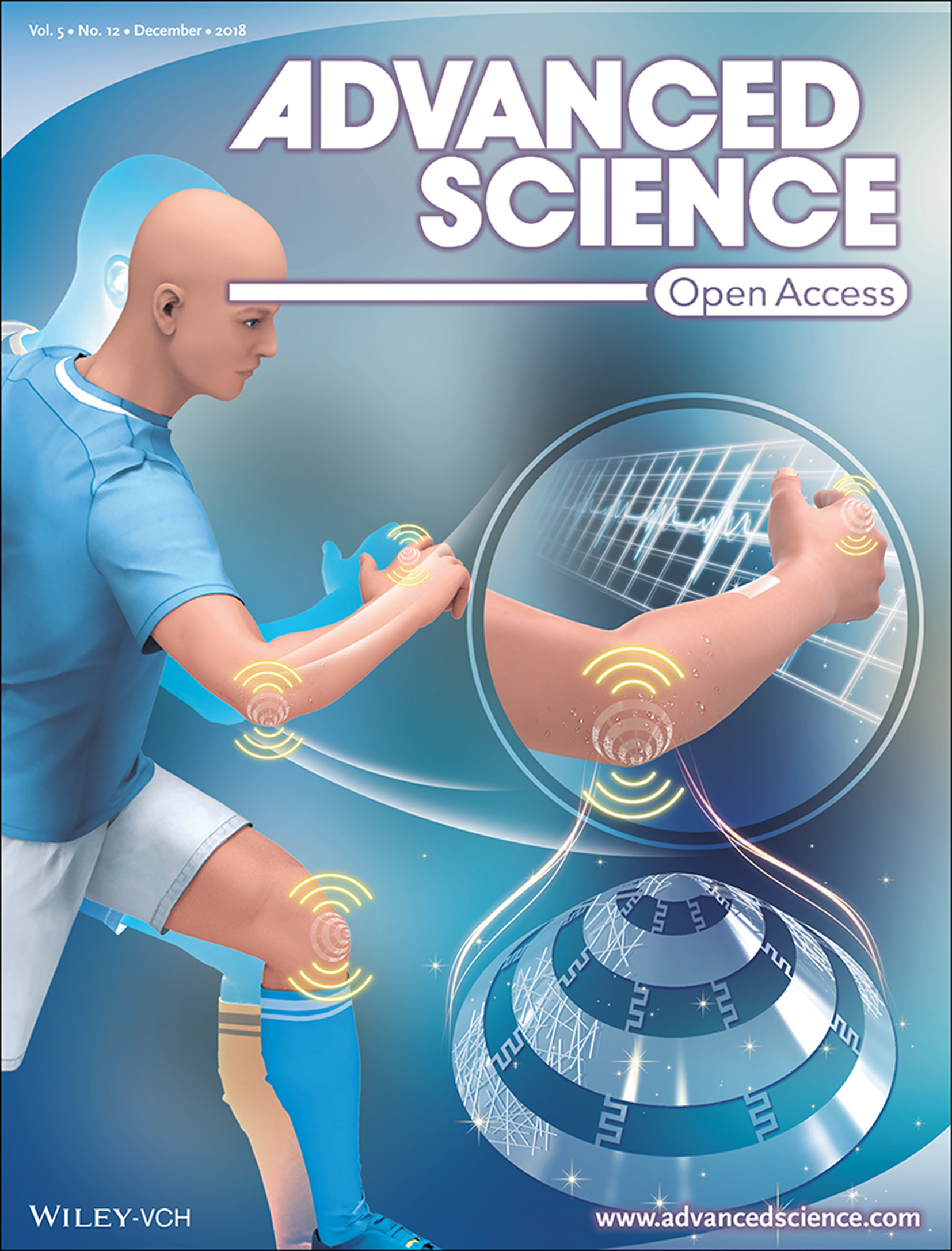
The rapid development of multimodal epidermal sensing requires scalable, energy-efficient data processing architectures capable of processing large volumes of raw data. Conventional systems suffer from high energy consumption and transmission latency due to the physical separation of sensors and processors. Here, we present an ultrathin flexible edge computing circuit based on carbon nanotube thin-film transistors (CNT-TFTs) and machine learning (ML)-assisted design. By incorporating substrate engineering, ML-derived device modeling, and industry-compatible design methodologies, we establish a complete toolchain from device to system. The ML model achieves 91.2% prediction accuracy, enabling simulation-guided optimization of logic gates. A CNT-based standard cell library enables the construction of flexible circuits with 361 transistors and 160 logic gates. Monolithic integration with an 8-channel tilt sensor achieves 62.5% data compression while maintaining functionality after undergoing 360° deformation. This work establishes an ML-assisted CNT circuit design framework for fully integrated flexible edge computing, enabling scalable wearable applications.
Website